
Understanding rare or newly discussed neurological conditions can be confusing, especially when information is limited or scattered. One such term that has recently gained attention is laturedrianeuro. Many people are asking a simple but important question: how are laturedrianeuro caused?
This in-depth guide is written to answer that question clearly and responsibly. It explains possible origins, contributing factors, biological mechanisms, and environmental influences associated with laturedrianeuro. While the condition is still being explored conceptually, this article presents structured, expert-style explanations in a simple, human-friendly tone
Understanding Laturedrianeuro: A Foundational Overview
Laturedrianeuro is generally described as a neurological-related condition characterized by irregular neural signaling and functional imbalance within specific brain–nerve pathways. While it is not yet widely classified in standard medical textbooks, the term is increasingly used in theoretical neuroscience discussions and exploratory research contexts. Understanding its foundations is essential before examining its causes.
At its core, laturedrianeuro is believed to involve disrupted communication between neurons. These disruptions may affect how the brain processes signals related to sensation, cognition, or motor coordination. Researchers propose that such disruptions may develop gradually rather than appearing suddenly.
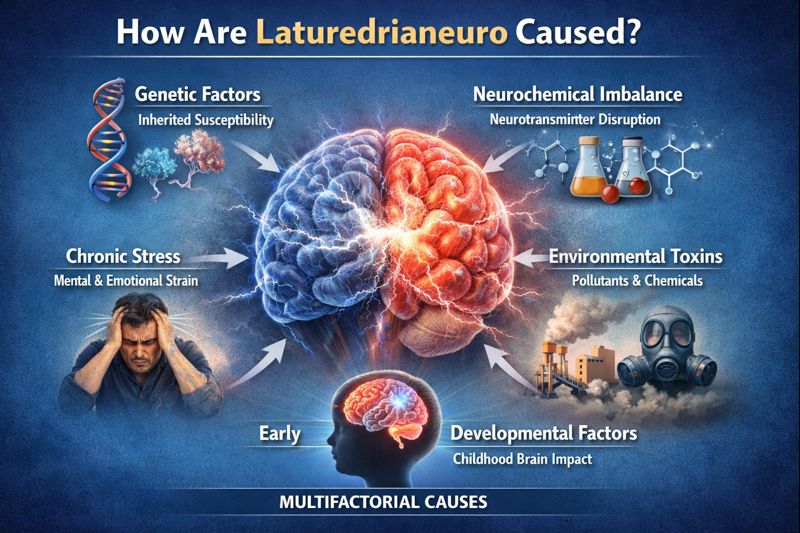
Another important aspect of laturedrianeuro is its multifactorial nature. Rather than being linked to a single cause, it is often discussed as the result of multiple overlapping influences. These may include genetic vulnerability, neurological stress, or long-term exposure to harmful conditions.
Because of its complexity, many experts approach laturedrianeuro as a spectrum-based condition. This means symptoms and severity can vary widely between individuals, which also suggests that the causes may differ from case to case.
Understanding these foundational ideas helps clarify why the question how are laturedrianeuro caused does not have a single, simple answer.
Biological and Neurological Factors Behind Laturedrianeuro
Neural Pathway Disruptions
One of the most commonly discussed explanations focuses on disrupted neural pathways. The human nervous system relies on precise electrical and chemical signaling. When these signals are delayed, overstimulated, or weakened, functional imbalance may occur.
In the context of laturedrianeuro, such disruptions may develop due to long-term neural stress or inefficient neurotransmitter regulation. Over time, this can alter how neurons respond to stimuli, leading to irregular neural behavior patterns.
Neural pathway disruption is rarely caused by a single event. Instead, it usually results from cumulative neurological strain. This strain may be linked to prolonged cognitive overload, repetitive stress, or insufficient neurological recovery periods.
Neurochemical Imbalances
Another biological factor often associated with laturedrianeuro is neurochemical imbalance. Neurotransmitters such as dopamine, serotonin, and acetylcholine play critical roles in brain communication. When their levels are consistently imbalanced, neural efficiency may decline.
These imbalances may interfere with how signals are transmitted across synapses. Over time, such interference can contribute to neurological irregularities that align with descriptions of laturedrianeuro.
Importantly, neurochemical imbalance does not automatically result in neurological conditions. It typically interacts with other biological or environmental factors, reinforcing the idea that laturedrianeuro develops through combined influences.
Structural Sensitivity in the Nervous System
Some theoretical discussions suggest that individuals with naturally sensitive neural structures may be more prone to developing laturedrianeuro. This sensitivity does not indicate damage but rather heightened responsiveness within neural circuits.
Highly responsive neural systems can process information efficiently, but they may also be more vulnerable to overload. If overstimulation persists, neural fatigue may occur, increasing the likelihood of functional disruptions.
This structural sensitivity further supports the idea that biological predisposition plays a role in explaining how are laturedrianeuro caused.
Genetic and Developmental Influences
Genetic Predisposition and Inheritance
Genetics may play a subtle but meaningful role in the development of laturedrianeuro. Certain individuals may inherit neurological traits that make their nervous systems more reactive or less resilient under stress.
These inherited traits do not directly cause the condition. Instead, they create a foundation upon which other contributing factors can act. This explains why not everyone exposed to similar conditions develops neurological irregularities.
Genetic predisposition is often expressed through patterns such as heightened sensitivity, slower neural recovery, or atypical neurotransmitter regulation. When combined with external influences, these traits may increase vulnerability.
Early Neurological Development
Neurological development during early life is another key area of focus. The brain undergoes rapid growth and adaptation during childhood and adolescence. Any disruption during this period may have long-term effects on neural organization.
Factors such as inadequate stimulation, excessive stress, or inconsistent neural feedback during development may influence how neural pathways mature. These influences may not cause immediate issues but could contribute to later neurological imbalance.
Developmental influences are especially relevant when discussing how are laturedrianeuro caused, as they highlight how early-life conditions can shape long-term neural behavior.
Adaptive Versus Maladaptive Neural Patterns
During development, the brain continuously adapts to its environment. While adaptation is generally beneficial, certain adaptive responses may become maladaptive over time.
For example, neural circuits that adapt to constant stress may remain in a heightened state even when stress is reduced. This persistent activation can contribute to irregular neural signaling patterns associated with laturedrianeuro.
This perspective emphasizes that laturedrianeuro may result from the brain’s attempt to adapt rather than from direct neurological damage.
Environmental and Lifestyle Contributors
Chronic Stress and Cognitive Overload
Chronic stress is widely recognized as a significant influence on neurological health. Prolonged stress can alter how the brain regulates hormones, neurotransmitters, and neural signaling efficiency.
In discussions of laturedrianeuro, chronic stress is often considered a major contributing factor. Constant mental pressure may exhaust neural resources, leading to communication inefficiencies between brain regions.
Cognitive overload, particularly in high-demand environments, may intensify these effects. Over time, the nervous system may struggle to maintain balance, increasing vulnerability to neurological irregularities.
Environmental Toxins and Exposure
Environmental exposure is another area of concern. Long-term exposure to certain chemicals, pollutants, or neurotoxic substances may interfere with neural function.
While direct causation is difficult to establish, consistent exposure may contribute to gradual neural stress. This stress can weaken neural resilience and amplify other contributing factors.
Environmental influences rarely act alone. They usually interact with genetic and biological predispositions, reinforcing the multifactorial nature of laturedrianeuro.
Sleep Patterns and Neural Recovery
Sleep plays a vital role in neurological maintenance and recovery. During sleep, the brain consolidates information, clears metabolic waste, and restores neural balance.
Irregular or insufficient sleep may impair these processes. Over time, inadequate neural recovery can contribute to persistent signaling inefficiencies.
This connection highlights why lifestyle patterns are often included when exploring how are laturedrianeuro caused, as daily habits significantly influence neurological stability.
The Multifactorial Nature of Laturedrianeuro
Interaction of Multiple Causes
One of the most important concepts in understanding laturedrianeuro is that no single factor is solely responsible. Instead, the condition is thought to arise from the interaction of biological, genetic, developmental, and environmental influences.
For example, a person with genetic sensitivity may remain unaffected until exposed to prolonged stress or environmental strain. Similarly, lifestyle factors may only become problematic when combined with underlying neural vulnerability.
This interaction-based model explains why laturedrianeuro presents differently across individuals.
Gradual Progression Over Time
Laturedrianeuro is generally discussed as a condition that develops gradually. Rather than appearing suddenly, neural irregularities may build up over extended periods.
Small inefficiencies in neural communication may initially go unnoticed. Over time, however, these inefficiencies may accumulate, leading to noticeable functional imbalance.
This gradual progression reinforces the importance of understanding early contributing factors rather than focusing solely on later symptoms.
Why Clear Definitions Are Still Evolving
Because laturedrianeuro is still an emerging concept, definitions and explanations continue to evolve. Researchers and theorists are actively refining how the condition is described and categorized.
This evolving understanding does not reduce its importance. Instead, it highlights the complexity of neurological systems and the need for continued exploration.
As knowledge grows, explanations of how are laturedrianeuro caused will likely become more precise and evidence-based.
Frequently Asked Questions (FAQs)
1. What does laturedrianeuro refer to?
Laturedrianeuro is a term used to describe a theoretical neurological condition involving irregular neural communication and functional imbalance within the nervous system.
2. How are laturedrianeuro caused in most cases?
Most discussions suggest that laturedrianeuro is caused by a combination of biological sensitivity, genetic predisposition, developmental influences, and environmental or lifestyle stressors.
3. Is laturedrianeuro caused by a single factor?
No, it is generally considered multifactorial. Multiple contributing factors interact over time rather than one single cause being responsible.
4. Can lifestyle habits influence laturedrianeuro?
Yes, factors such as chronic stress, sleep patterns, and environmental exposure are often discussed as contributing influences on neurological balance.
5. Is laturedrianeuro a sudden condition?
No, it is typically described as developing gradually, with neural irregularities accumulating over extended periods.
6. Are genetics important in laturedrianeuro?
Genetics may influence susceptibility by shaping neural sensitivity, but they are not considered a direct cause on their own.
7. Is research on laturedrianeuro still ongoing?
Yes, understanding of laturedrianeuro is still evolving, and explanations continue to be refined as neurological research progresses.
Final Thoughts
The question how are laturedrianeuro caused reflects a growing interest in understanding complex neurological conditions beyond simple explanations. Laturedrianeuro is best viewed as the result of interconnected influences rather than a single trigger. By examining biological, genetic, developmental, and environmental factors together, a clearer picture begins to emerge.


